How to File a Roof Insurance Claim in North Indy
A plain-English walkthrough of how storm damage claims actually work — written for homeowners in Hamilton and Boone County, not for insurance adjusters. This is general information, not legal or insurance advice; your specific policy language controls, so confirm anything claim-critical with your agent or insurer directly.
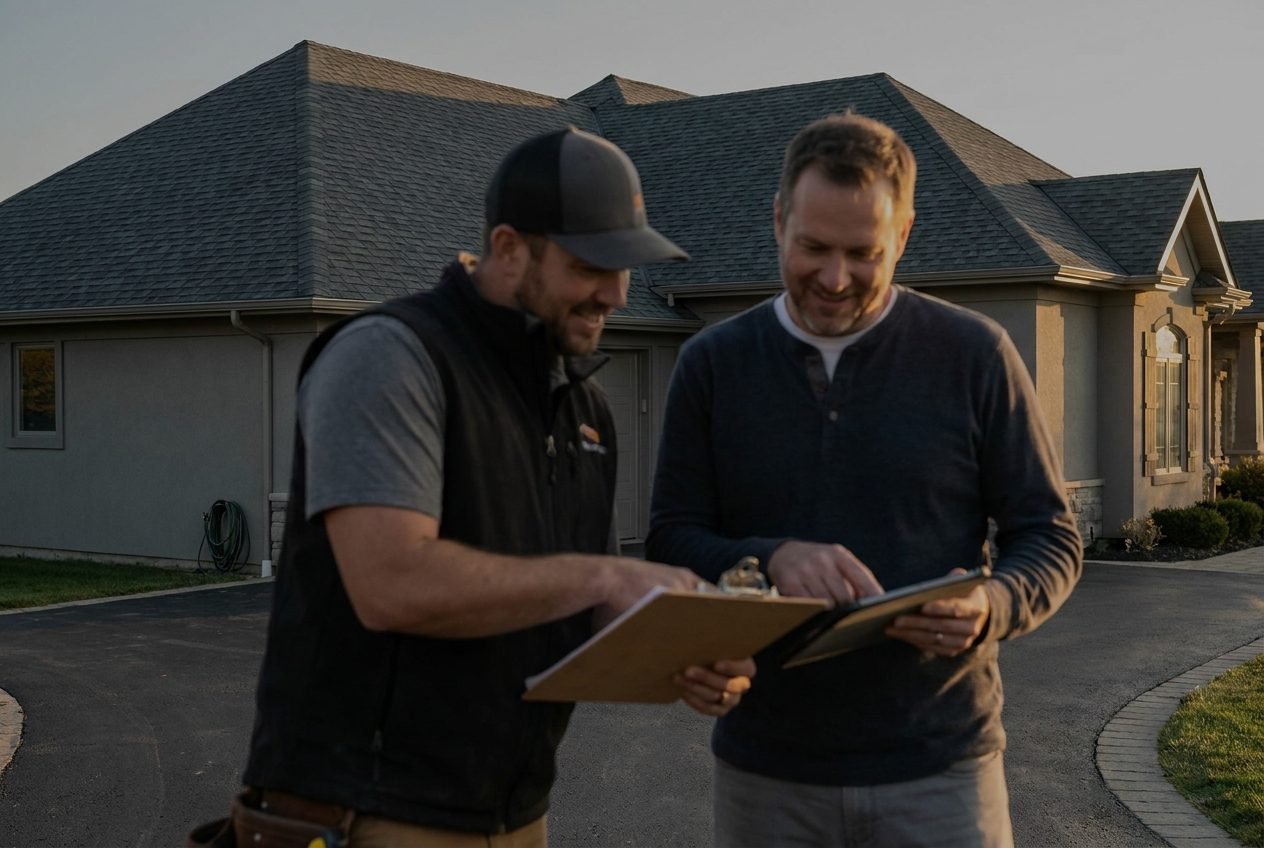
Central Indiana sits in an active severe-weather corridor — tornado watches and severe thunderstorm warnings covering Hamilton, Boone, Marion, and surrounding counties are a routine part of spring and early summer here, not a rare event. If a storm has recently passed through your neighborhood, hail bruising and wind-lifted shingles are often invisible from the ground. A quick inspection now is the difference between an insurance-covered repair and a slow leak that shows up as a bigger bill next year.
What's typically covered
Most standard Indiana homeowner's policies cover roof damage caused by wind and hail as "named perils" — meaning the damage was caused by a specific, sudden event rather than gradual wear. This is why documentation timing matters: a roof that's simply old and worn is generally not a covered claim, but the same roof damaged by a specific hailstorm on a specific date usually is, provided the damage is properly documented close to when it happened.
What typically isn't covered: damage from lack of maintenance, pre-existing wear that gets blamed on a recent storm, and in some cases cosmetic-only hail damage that doesn't affect the roof's function, depending on your specific policy's wording. This is exactly the kind of detail that makes reading your actual policy — not just assuming standard coverage — worth the time before you file.
The claims process, start to finish.
Document the damage before anything else
Photos of visible damage, the date you noticed it, and — if you know it — the date of the storm event. Do this before calling anyone, including your insurer, so you have your own record independent of what an adjuster later reports.
Get a professional roof inspection
A roofing contractor can identify damage that isn't visible from the ground — hail bruising, granule loss, and lifted shingles are frequently missed in a homeowner's own walk-around. This inspection also gives you an independent record separate from the insurer's adjuster.
File the claim with your insurer
Most insurers want to be notified reasonably promptly after damage occurs — check your specific policy for any notice requirements, since these vary by insurer. Have your policy number and the storm date ready when you call.
Meet the adjuster — ideally with your contractor present
The insurance adjuster will inspect the roof and estimate the covered damage. Having your roofing contractor on-site at the same time means someone who knows roofing specifically can point to damage the adjuster might otherwise underestimate.
Review the estimate against an actual repair scope
Compare the insurer's estimate line-by-line against what a licensed contractor says the repair actually requires. Gaps most often show up around flashing, decking replacement, and code-required upgrades that a generic estimate template doesn't always capture.
Understand actual cash value vs. replacement cost
Many policies pay in two parts: an initial actual cash value (ACV) payment, with the remaining "recoverable depreciation" released once the repair is completed and documented. If your policy works this way, budget for this timing before starting work.
Schedule the repair and submit final documentation
Once work is complete, submit the final invoice and any documentation your insurer requires to release the remaining payment. Keep copies of everything — before photos, the estimate, the adjuster's report, and the final invoice.
What actually costs homeowners money.
- Waiting too long to document damage. Hail bruising weathers and becomes harder to prove as time passes, especially across multiple storm events.
- Accepting the first estimate without comparison. A generic adjuster estimate can miss flashing, decking, and code-upgrade costs a real repair requires.
- Not understanding the depreciation holdback. If your policy pays ACV first, know that upfront rather than being surprised the check doesn't cover the full repair cost immediately.
- Skipping a second opinion on a denied claim. Denials aren't always final — a documented professional inspection can support a formal re-inspection request.