8 Factors That Affect Your Roof Replacement Cost
The line items that actually move your final number, beyond just square footage.
The eight factors
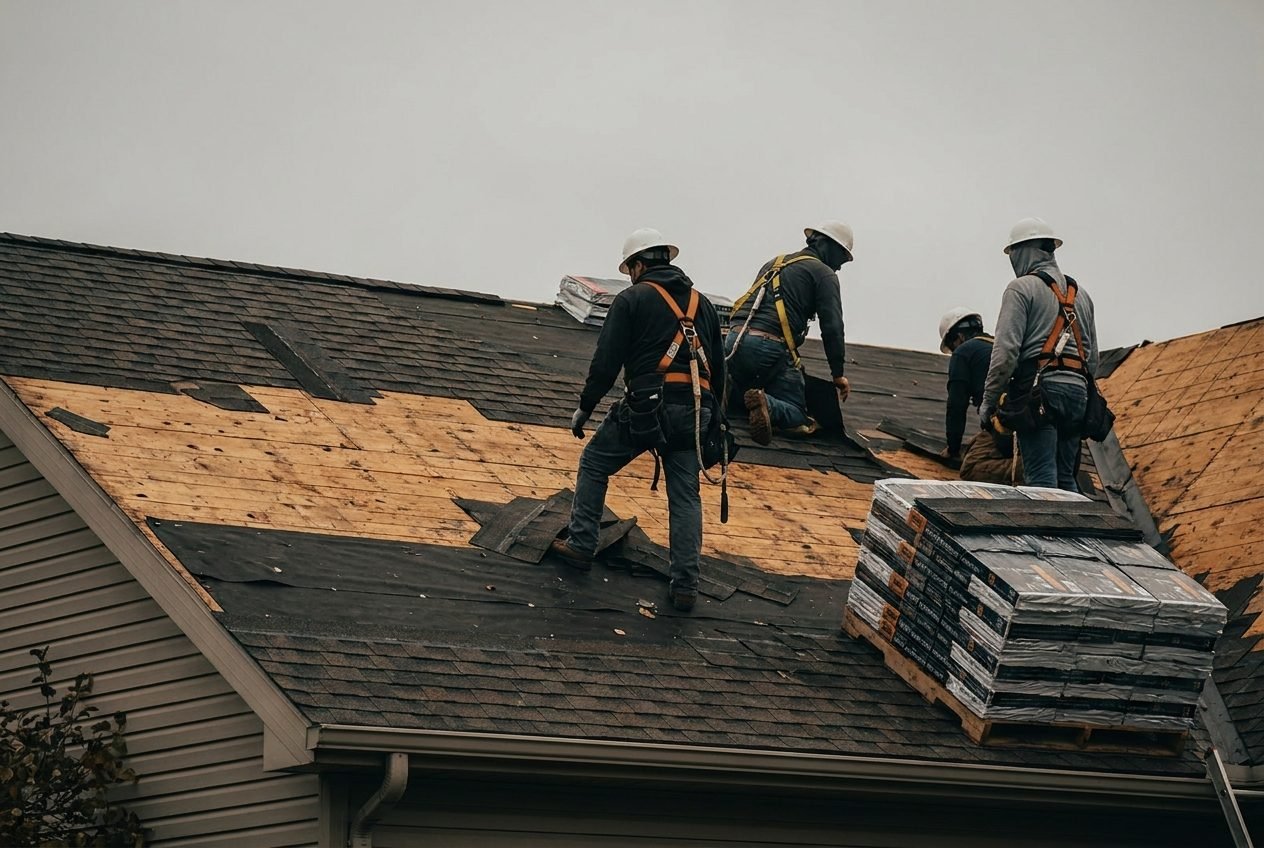
1. Roof size — measured in squares, the baseline for material quantity. 2. Pitch — steeper roofs take longer and require different safety staging. 3. Complexity — valleys, dormers, and roof planes add labor beyond square footage alone. 4. Material choice — from standard asphalt to premium shingle lines to metal. 5. Decking condition — any rot or damage found during tear-off adds repair cost. 6. Accessibility — difficult site access (steep driveways, limited staging area) can add labor time. 7. Local permitting — costs and requirements differ between Hamilton and Boone County. 8. Tear-off scope — a full tear-off costs more upfront than a layover, but a layover is rarely the right long-term choice.
Which of these are worth paying more for
Full tear-off versus layover is the one item on this list we'd actively steer you away from cutting — a layover traps moisture issues and shortens the new roof's effective lifespan, so the upfront savings usually cost more over time. Decking repair is similarly non-negotiable once discovered; installing new shingles over compromised decking just moves the problem forward a few years.
Getting a number you can actually trust
Because these factors interact — a complex roofline with a premium material costs meaningfully more than a simple roofline with the same material — a generic price-per-square-foot number is close to useless for real budgeting. An itemized, in-person estimate is the only way to see how these factors combine for your specific roof.