Asphalt Shingles vs. Metal Roofing: Which Is Right for Your Home?
Both are legitimate choices for North Indy homes — the right one depends on your timeline, budget, and roofline, not brand preference.
Cost and lifespan, side by side
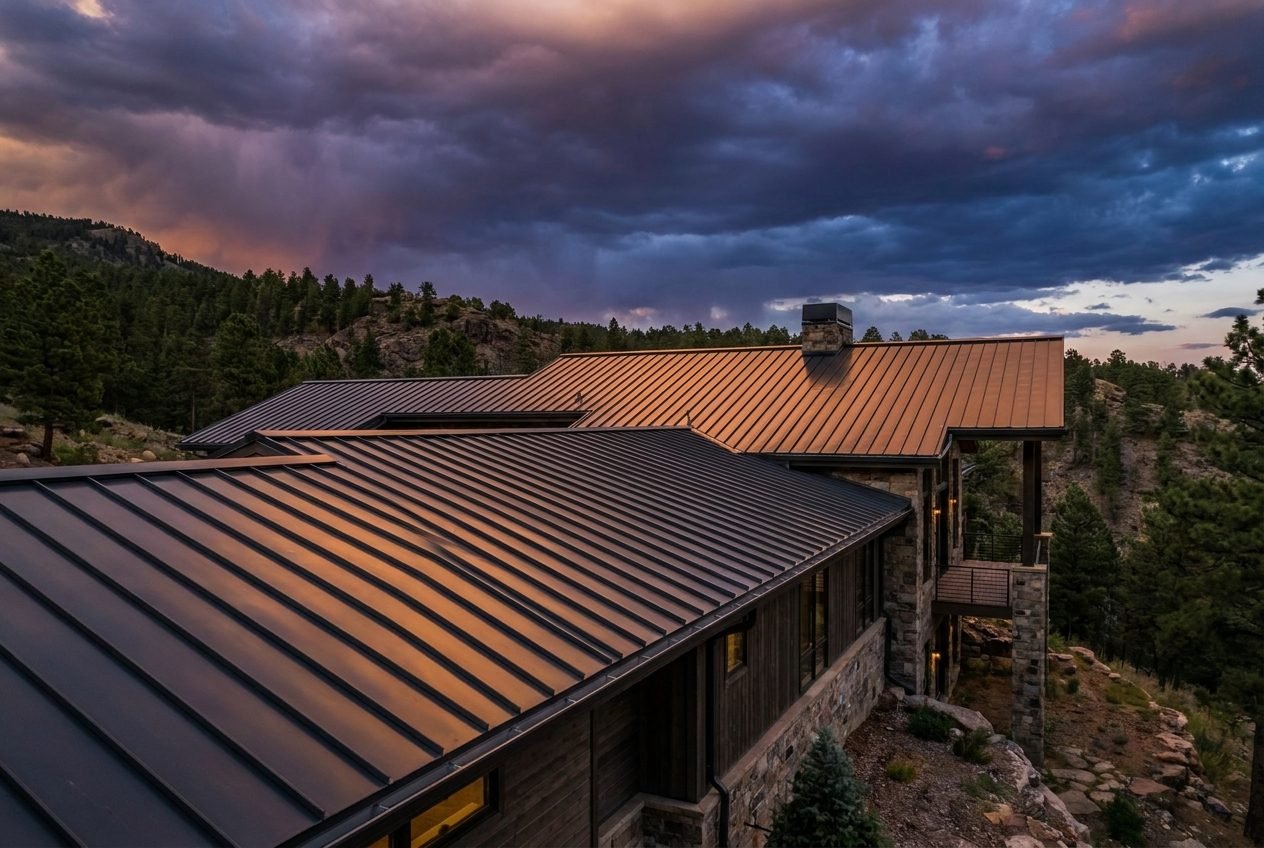
Architectural asphalt shingles cost less upfront and are the standard choice for most homes, with a typical lifespan of 20–30 years. Standing seam metal costs more upfront — commonly a meaningful multiple of shingle pricing — but often lasts 40–50+ years, which changes the cost-per-year comparison substantially over a homeowner's full ownership period.
The breakeven point depends on how long you plan to stay in the home. For a homeowner planning to sell within 5–10 years, asphalt is often the more sensible financial choice. For someone planning to stay long-term, metal's lower lifetime cost-per-year can outweigh the higher initial price.
Performance differences that matter in Indiana
Metal roofing generally handles wind uplift and hail impact better than asphalt, which matters more for wind-exposed properties — like homes around Geist Reservoir with reduced tree buffer — than for a typical sheltered inland lot. Metal also sheds snow and ice differently than asphalt, which can reduce ice dam risk in some roof configurations.
Asphalt has its own advantages: it's easier and generally cheaper to repair a small isolated section, and shingle color and style options are broader for matching a home's existing architectural character.
Which homes tend to be the better fit for each
Larger, architecturally distinct custom homes — common in Zionsville's newer communities and around Geist — are frequently a strong fit for metal, both financially over a long hold period and aesthetically. Standard production-built homes, or homes where the owner has a shorter ownership horizon, more often make sense with asphalt.